

After I ate everything under the sun for the first two months, the paediatrician diagnosed my baby with lactose intolerance. My baby’s skin was rough with rashes, his tummy was bloated and his poop was dark green. After the 2-month vaccination visit to the doctor, I stopped having milk, cheese and curd, though the paediatrician had a longer list of things for me to avoid. We also switched the infant formula to MMS Algy as prescribed by the doctor. It was just an intolerance, so how serious could it be?
But after the 3-month vaccination visit, our doctor was still not happy with my baby’s skin. He asked me to believe the allergy was real and stop consuming everything related to animal milk. He said he would prove it by showing me my baby’s skin in 6 months. I was taken aback, but I said okay.
I knew the gist of being lactose intolerant, as I have a friend who is. What I didn’t know was how many products had animal milk, or its relatives, in their ingredients. And it’s not even funny! That’s when I realized what lactose intolerance really meant. I started checking the ingredients of everything I consumed, including oil cans, water bottles, etc., just to get into the habit of noting what each product contained.
My favourite breakfast item at hotels is a croissant, and my favourite English dessert at restaurants is Creme Brulee. Both are naturally out of the question. But what about pepperoni? The husband got some pepperoni, from abroad, which generally contains cured beef, pork, spices and a starter culture. I thought of having one small slice along with my eggs and chapati that morning. Out of recent habit, I turned to look at the ingredients and saw the word lactosa. Lactose is a natural sugar found in milk and dairy products. I put the rest of the Spanish words through Google Lens Translate and guess what stared me in the face! The title: Pepperoni with MILK SOLIDS, and its ingredients included milk proteins. With a heavy heart, I took that one small slice of pepperoni and put it into a sandwich made for my husband.
Then came a shock when I thought I’d have simple dal, rice and pickle. You may not believe it, but Mother’s mango pickle has a disclaimer at the back which states that the product MAY CONTAIN MILK, Soy, Nut, Peanut, Wheat and Sulphite. I closed my eyes, took a deep breath, and put the pickle bottle back in the fridge. I took out a decent homemade pickle and requested my mind and taste buds to enjoy it. Yes, Mother’s ginger-garlic paste also has this disclaimer, but we still use it in our dishes as everything is heated and mixed with the meats, vegetables and spices.
Then came bigger shocks! I couldn’t have my favourite Indian dessert – falooda. I couldn’t have my favourite Indian drink – lassi (malai marke). That’s the first thing I have when I visit Bombay. My favourite fast food is KFC and they use milk in their seasoning and breading mix. Yes, some of you may know that, but I never bothered to prepare it at home, so I didn’t know milk was involved in the mix. Then the most heartbreaking thing was that my favourite mocktail, Pina Colada, usually free of dairy, is NOT really dairy-free in most places in India. This I found out when my husband told me to check again because in India, restaurants usually use fresh cream (from cow’s milk) instead of coconut cream to save costs. When I confirmed with the bartender at a couple of places, it was true. One place on Carter’s Road in Mumbai even uses Vanilla ice cream in it. God help me!
I was unpleasantly surprised that so many products had milk in them. Now, I check everything I eat, and I also check with friends who order dishes or cook for me about the presence of dairy in the food. I make sure I do not have anything that includes animal milk. Not even a bite. I also went to the extent of telling my kids not to put their buttery spoons on my plate or to sip my drink if they had eaten food with animal dairy in it. Yes, I got the rolling eyes from them, but I had to do it for my baby’s sake.
Slowly, my kids got used to it and now stop me if they think there is dairy in something I’m about to eat. After all, as a family, we are all in this together.
We just visited the paediatrician again a few days ago for my baby’s 4-month vaccination visit. The doctor was very happy with my little one’s skin (his skin had smoothened out) and said that this was clearly a case of cow’s milk protein allergy (CMPA). He praised me (multiple times) for doing a wonderful job. I smiled with excitement and a tinge of shyness, just like I used to when my English teacher gave me stars and held my exam paper up in front of the whole class to show everyone an example of good handwriting and how to strike out mistakes neatly. Here at the hospital, my sacrifice and willpower were getting applauded, and the husband was smiling. I couldn’t stop blushing.
So, I started thinking about the whole experience. And wondered how many mothers actually achieve this. To cure your baby’s skin, it’s not only you who has to sacrifice, as this is totally a trial-and-error time for your taste buds. But other family members and close friends you meet regularly also have to help you achieve this. You may have to switch to products that cost more than normal milk products. As a team, everyone has to make sure the mother has dairy-free but healthy foods.
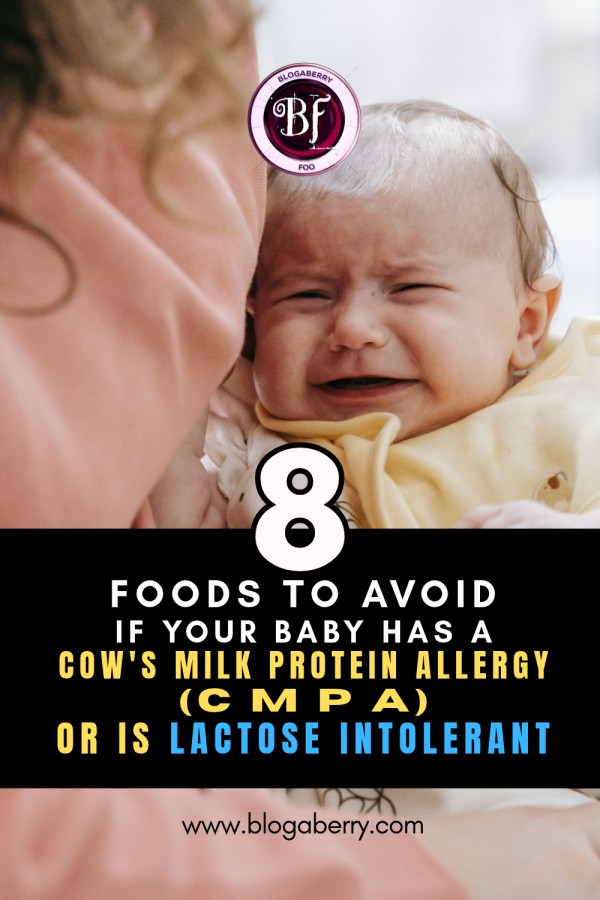
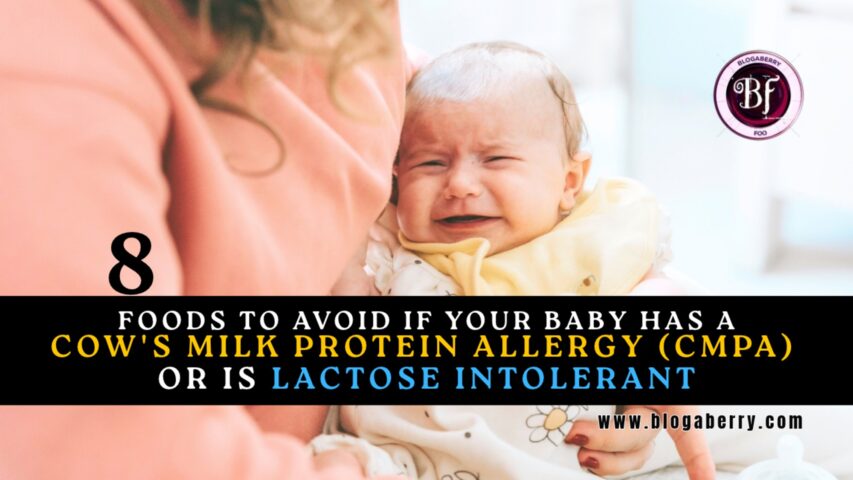
As we are breastfeeding those little lactose-intolerant babies, we have to stay away from the following food items. Hopefully, this list will help you with foods/drinks to avoid and what you can have instead.
ALERT : This includes omitting milk from goats, cows, buffaloes, etc. from your diet. Also, skimmed or low-fat milk, milk powder, milkshakes, chocolates, toffees, cakes, waffles, pancakes, porridge with cow’s milk, mashed potatoes, kefir, falooda, etc. should be avoided.
IDEA : You can have some of the above foods and replace animal milk with vegetables or plant-based milks like oat milk, almond milk or soy milk of your choice, but check the ingredients before consumption. Coconut milk is also a good substitute for cooking or baking.
ALERT : Avoid hung curd dips, Greek yoghurt, flavoured yoghurt, homemade curd, set curd, lassi, etc. Also avoid meats marinated with curd. Avoid foods like Biryani, Malai chicken, Malai paneer, etc.
IDEA : No real substitute here. Unless you get your hands on vegan yoghurt.
ALERT : You have to avoid everything related to cheese: the blocks, dips, spreads, pizzas, some pasta dishes, cheesecakes, kunafa, etc. Avoid cottage cheese (paneer), too.
IDEA : Just don’t look at them or have tofu and soy chunks instead. Get creative and make healthy spreads, if possible. You can use non-dairy pesto sauce in pasta dishes.
ALERT : This is very hard for many Indians to avoid, but as they say, prevention is better than cure. Last week we visited a Middle Eastern restaurant and found that their premixes had ghee in them. Middle Eastern dishes don’t usually have ghee in them, but in India some do, so it’s always better to check for dairy-free dishes than assume at restaurants.
IDEA : Use olive oil or other products to enhance taste. I saw somewhere that vegan ghee was a thing, but I haven’t explored it yet.
ALERT : Avoid cooking butter, margarine, Butter Garlic Prawns, Garlic Butter, Pav Bhaji, cookies, Kheema pav, etc.
IDEA : Vegan butter, maybe?
ALERT : Avoid Creme Brulee, Amul Fresh Cream, Fruit Cream Salads, Whipped Cream, Cream of mushroom/chicken soup, Pina Colada, etc.
IDEA : Have your fruits as is, have clear soups and dairy-free mocktails.
ALERT : Keep away from all flavours of ice cream and gelato.
IDEA : You can search for vegan ice creams, sorbets or golas near you. It’s impossible to get such things in my area. The only vegan ice cream available was chocolate, and the only sorbet available was watermelon, so I stopped looking.
ALERT : Most breads have milk or butter in them. The whole-wheat bread we buy also contains milk solids.
IDEA : Try sourdough bread instead or just have homemade chapati.
As long as I’m breastfeeding, I have to avoid consuming the above-listed items. On the upside, I’m hoping this sacrifice will cure my baby’s gut as well as let me lose some excess baby fat. He just turned 5 months and his poop has already turned lighter green as of today.
On the downside, getting calcium into our system will be tricky. So, I try to eat lots of calcium-rich foods like plant-based milks, green leafy vegetables, millets, sesame seeds, almonds, salmon, etc. You can add sesame seeds to pesto sauce, salads and more. You can replace rice with millets in some of your meals. I may be crazy, but to improve lactation, add iron and lots of calcium to my diet, I’ve come up with a dry vegetable dish: the ingredients are onion, tomato, coconut, fenugreek seeds, flax seeds, spinach, fenugreek leaves, Malabar spinach leaves and ivy gourd. 😉
Keeping my fingers crossed and praying that my baby does not have CMPA for life! The paediatrician said once my baby turns 6 months, he will start us on milk laddering. Looks like that’s going to be a topic for another blog soon.
Do you know someone who is lactose intolerant or has CMPA? IF you think this is a good article, please send this to them.
Feature Photo by Sarah Chai
This blog post is part of ‘Blogaberry Dazzle’ hosted by Cindy D’Silva and Noor Anand Chawla in collaboration with Ratna Prabha.