


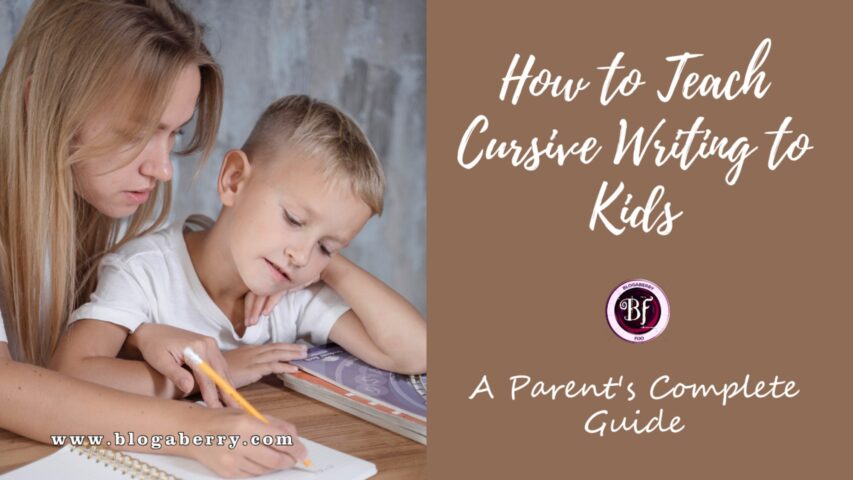
Teaching cursive writing to kids can feel like a big task at first. The loops, curves, and connected letters may look difficult, but children can learn cursive handwriting with the right steps and regular practice. Cursive writing helps kids improve pencil control, develop fine motor skills, and build confidence in their handwriting.
Even in today’s digital world, handwriting is still an important skill for children. Learning cursive gives kids a creative way to write and improves their writing flow.
In this complete guide, you’ll learn how to teach cursive writing step by step, from basic strokes and lowercase cursive letters to connecting letters and writing complete words. Let’s make cursive writing practice simple, enjoyable, and successful for your child.
Cursive writing is a style of handwriting where letters in a word are connected with smooth and continuous strokes. Unlike print writing, where each letter is written separately, cursive allows children to write words with fewer pencil lifts, creating a more natural flow.
When kids learn cursive writing, they are not learning a new alphabet. They are learning a new way to form the same letters they already know. Cursive letters use different movements, such as curves, loops, and connecting strokes, which help children improve their pencil control and handwriting skills.
For example, a child may already know how to write the letter ‘A’ in print. In cursive, they learn how to create that letter with a smooth motion and connect it with the next letter in a word.
Cursive writing is more than just a way to make handwriting look beautiful. It helps children develop important skills that support learning, communication, and confidence.
Writing cursive letters requires children to control small hand movements. Creating loops, curves, and joints helps strengthen the muscles in their fingers and hands.
These fine motor skills are important for many everyday activities, including drawing, cutting, holding objects, and writing neatly.
Cursive practice teaches children how to guide their pencil carefully across the page. They learn how much pressure to apply, where to start each stroke, and how to connect one letter to another.
This improves hand-eye coordination and helps children develop cleaner and more readable handwriting.
Because cursive letters are connected, children learn to write with a continuous motion instead of stopping after every letter. With regular practice, this can make writing feel easier and more natural.
As children become comfortable with cursive handwriting, they often gain better writing speed and confidence during longer writing tasks.
Learning cursive gives children another way to understand letters and words. They learn to recognize different letter shapes and understand how letters work together to create words.
This extra practice can support early literacy skills and help children become more comfortable with written language.
Learning cursive takes patience and practice. When children successfully form their first cursive letters and words, they feel a sense of achievement.
Small improvements, such as writing their name in cursive or joining two letters correctly, can motivate them to keep practicing and improve their handwriting skills.
Cursive writing requires attention to detail. Children need to remember letter shapes, follow stroke patterns, and practice carefully.
This process helps them develop concentration, discipline, and patience while learning a valuable skill.
While every child learns at a different pace, the best results come from short and regular practice sessions. With encouragement and the right guidance, cursive writing can become an enjoyable activity that helps children grow as confident writers.
Most children are ready to learn cursive writing around grades 2 to 3, after they become comfortable with basic print handwriting. At this stage, kids usually have better pencil control, understand letter shapes, and can focus on learning new writing movements.
However, every child develops at a different pace. Before starting cursive writing practice, make sure your child can:
Start with short, fun practice sessions and focus on progress rather than perfection. A positive learning experience will help children build confidence as they develop their cursive handwriting skills.

Teaching cursive writing is easier when kids learn gradually. Start with basic strokes, then move to letters, connections, and words. A step-by-step approach helps children build strong handwriting skills, improve pencil control, and gain confidence. Follow the guide below to teach cursive writing effectively.
Before teaching individual cursive letters, help your child understand the basic movements that create those letters. Cursive writing is built from simple strokes, and practicing these movements first makes learning the alphabet much easier.
Start with easy pencil exercises that teach children how to control their hands and move smoothly across the page. These basic strokes help develop pencil control, hand-eye coordination, and confidence before moving on to complete cursive letters. Common cursive strokes include:
Spend time practicing these movements with tracing activities or simple handwriting exercises. Once children feel comfortable with these strokes, they will find it easier to form cursive letters correctly.
When teaching cursive writing, it is important to introduce letters in the right order. Trying to teach all 26 cursive letters at once can overwhelm children and make practice frustrating. A better approach is to start with cursive alphabet A to Z worksheets, practice simple letter patterns, and gradually move toward more complex cursive formations.
Lowercase cursive letters should usually be taught first because they appear most often in everyday writing. They also help children understand the connected movement that makes cursive writing different from print. Begin with letters that share similar strokes and movements. For example:
Teaching letters in groups helps children recognize patterns instead of memorizing each letter separately. They learn how their hand should move, which makes forming new letters easier.
Once children feel comfortable with lowercase cursive letters, introduce uppercase cursive letters. Capital letters often have more complex shapes and unique strokes, so learning them later helps children build confidence.
Start with uppercase letters used most often, such as the first letter of their name, family names, and common words. Practice capital letters through meaningful activities instead of isolated drills.
At every stage, encourage children to focus on forming each cursive letter correctly. Remind them where to start, which direction to move the pencil, and how to create smooth strokes.
With regular practice, children will naturally improve their cursive handwriting speed and fluency. The goal is to help them feel comfortable and confident while writing the cursive alphabet.
Once children become comfortable forming individual cursive letters, the next step is learning how to join them together. Cursive joining letters is an important skill because it helps children write words smoothly without lifting the pencil after every letter.
Start with simple letter connections and let your child practice how one letter flows into the next. Use cursive joining letters worksheets to help children understand where each letter starts, ends, and connects.
Begin with easy combinations such as:
After practicing individual letter connections, move on to short and familiar words like cat, name, sun, and ship. This helps children see how cursive letters work together in real writing.
Encourage your child to focus on smooth movement and correct letter formation instead of writing quickly. With regular practice, joining cursive letters becomes easier, and children develop better handwriting flow and confidence.
After children learn individual cursive letters and practice joining them, the next step is to use those skills in real writing. Moving from letters to words, sentences, and paragraphs helps children understand how cursive handwriting works in everyday situations.
Start with short and familiar words that children already know, such as their name, simple sight words, and common vocabulary. This helps them focus on writing smoothly instead of struggling to remember the meaning of words.
Once they feel comfortable writing words, introduce simple sentences. Encourage children to write short thoughts, copy their favorite lines from books, or practice daily journal entries.
As their cursive writing skills improve, gradually move to short paragraphs. Writing stories, descriptions, or small notes can make practice more enjoyable and meaningful.
Remember, the goal is not perfect handwriting from the beginning. Regular practice, encouragement, and patience help children develop better cursive fluency, confidence, and writing skills over time.
Teaching cursive writing can be a fun and rewarding experience, but some common mistakes can make the learning process harder for children. Understanding these challenges can help parents create a more positive and effective cursive writing practice routine.
One of the most common mistakes is introducing too many cursive letters too quickly. Learning the entire alphabet at once can feel overwhelming for beginners.
A better approach is to teach a few letters at a time and group letters with similar strokes and movements. Small learning steps help children build confidence, remember letter formations, and improve their cursive handwriting naturally.
Many parents expect children to write perfect cursive letters from the beginning. In reality, handwriting improves through practice and patience.
Instead of focusing only on neatness, encourage your child’s effort and progress. Celebrating small improvements helps children stay motivated and enjoy learning cursive.
Another mistake is moving too quickly from letter names to full words without teaching proper letter formation.
Correct strokes are the foundation of good cursive handwriting. Children should learn where each letter starts, how the pencil moves, and how strokes connect before practicing complete words.
Long handwriting sessions can make children tired and frustrated. Young learners often benefit more from short, regular practice sessions.
A few minutes of daily cursive practice is usually more effective than a long session once a week. Consistent repetition helps children build muscle memory and improve gradually.
Proper posture and pencil grip play an important role in handwriting development. Poor sitting position or an uncomfortable pencil grip can make writing difficult and cause children to develop bad habits.
Make sure your child sits comfortably, holds the pencil correctly, and has enough space to move their hand freely. A good writing setup helps children learn cursive more easily and comfortably.
The right learning resources can make cursive writing practice easier and more enjoyable for kids. Below are some top websites offering free cursive worksheets and comprehensive guides that help children improve their handwriting skills effectively.

Artful Cursive is a complete learning resource for kids who want to improve their cursive handwriting step by step. It offers free printable cursive worksheets covering individual letters, cursive joining letters, words, sentences, and paragraphs. Children can start by practicing cursive letters and gradually move toward writing complete sentences with better flow and confidence.

K5 Learning is a trusted educational platform that provides a wide range of free worksheets for children, including handwriting practice resources. Its cursive worksheets are designed to help kids practice letter formation, improve writing control, and develop stronger handwriting skills through structured exercises.
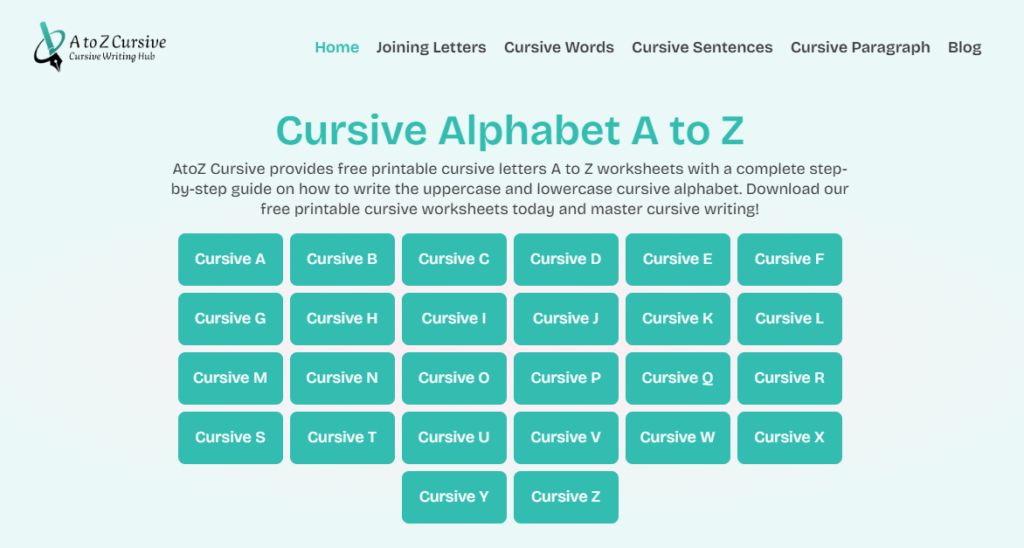
AtoZ Cursive focuses specifically on helping children learn the cursive alphabet from A to Z. The website provides free printable worksheets and step-by-step guides for both uppercase and lowercase cursive letters, making it a useful resource for beginners learning proper letter formation and strokes.
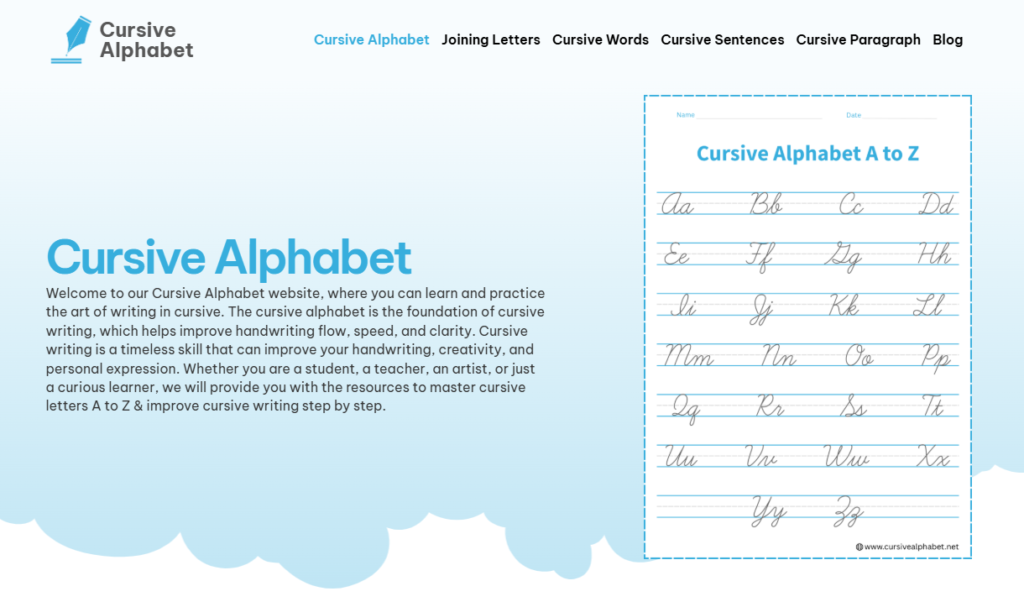
Cursive Alphabet provides simple tutorials and printable worksheets for learning individual cursive letters. Kids can practice uppercase and lowercase letters with guided examples, understand proper stroke movements, and gradually improve their cursive handwriting skills from basic letters to complete words and sentences.

Inky Letters offers a complete cursive writing guide with printable worksheets for letters, words, and sentences. Its resources help children practice cursive alphabet formation, improve fine motor skills, and develop smoother handwriting through consistent practice. It is especially helpful for beginners who need a structured path from learning individual letters to writing connected words.
Teaching cursive writing to kids is a journey that requires patience, practice, and encouragement. While learning loops, curves, and connected letters may seem challenging at first, children can develop strong cursive handwriting skills when they learn step by step.
Start with basic strokes, move to individual cursive letters, practice joining letters, and gradually help your child write words, sentences, and paragraphs. Remember, the goal is not perfect handwriting from day one; it is helping children build confidence, improve pencil control, and enjoy the learning process.
With regular practice and the right resources, cursive writing can become a fun and rewarding skill for your child. Celebrate small improvements, provide positive support, and give your child the time they need to become confident cursive writers.
Photo by Tima Miroshnichenko, and the respective websites mentioned above.
This blog post is part of ‘Blogaberry Dazzle’
hosted by Cindy D’Silva and Noor Anand Chawla
in collaboration with Mister Tikku.















21 Comments
Such a helpful guide! 😊 Cursive writing can be tricky at first, but these simple tips make it so much easier and fun for kids. ✍️❤️
Your post took me back decades ago, and reminded me of my own cursive writing book, in which I used to practice. This is a truly useful guid for parents to help them inculcate cursive writing in their kids. Though these days later on handwriting becomes less and less used, still cursive writing is something that goes beyond ordinary writing.
This article is helpful because it explains cursive writing step by step, making learning easier for kids while improving fine motor skills, pencil control, confidence, and overall handwriting fluency
This is such a well researched and well written article. It reminds me of when I learnt cursive writing. I used to love it, still do. I’ll share this with my niece!!
This is a very useful and informative post for parents like me
Your guide makes cursive feel simple instead of intimidating. The step by step approach is practical and encouraging. Parents will find these tips easy to follow. Very helpful and thoughtfully written.
I was reminded of how tough it was to teach my eldest writing – had a teacher come in just to make him practice his letters. Till today his handwriting is pretty bad!
This is a helpful article on a step-by-step guide. I feel even someone looking to improve their cursive writing would greatly benefit from following the steps in the order you have given. I definitely feel cursive writing looks good and adds that extra oomph to anyone’s writing.
Kids today don’t have the patience to learn and write cursive writing. This post has helpful tips that can make their overall learning experience a good one and make parents’ job easier.
I didn’t even know there were these many cursive writing styles. I couldn’t even master normal cursive writing.
Useful and detailed guide for learning cursive writing. This will prove beneficial for parents teaching cursive handwriting to their children.
My son is small and now the cursive learning mode, but as a graphologist mommy I would like to mention that some of the formation of the cursive writing patterns create some sub conscious programming unknowingly for the child which at the later stage causes behavioral problems which turns difficult to difficult. Your handwriting is your minds reflection and talks about your inner self . I believe that it is high time that certain changes are included with modern takes of graphology to help a child built a strong psychological and behavioral base for a better tomorrow.
Interesting!
Really helpful tips for parents starting cursive at home. I like the step-by-step approach. It feels practical and easy to follow.
Hmm…useful for moms struggling with their kid’s handwriting. Thankfully, my son has never struggled with his handwriting, so I was saved, but many children certainly need this. Good that you thought about sharing useful tips.
This is such a useful post. I remembered my time when I learned cursive writing. Back then it was not that common, and I get to learn it when I was in third class, and how writing them again and again was asked to get better at it. But now if anybody wants to teach their kids cursive with a strategy then this blog can help them at best.
Thanks, Tanvi!
Such a thorough, reassuring guide! I love that you start with basic strokes before jumping to letters — that “recognising patterns” approach makes so much sense. Cursive really is a lovely skill worth preserving in our digital age!
This is such a detailed and well-explained post, loved how you have broken down each step to teach kids cursive writing from posture and grip to the practice drills.
It’s so helpful for parents like me who want to make learning fun instead of stressful. Thank you for sharing such practical tips. Bookmarking this for daily practice.
Wow, Cindy, you have almost done a thesis! Such. detailed post this is. My son was extremely bad at handwriting. No matter how much I tried, it used to be the same.I wish I had this blog to read at that time. I could have tried it then.
My daughter learned in grade 3. This is a very comprehensive and easy-to-follow guide to learn Cursive writing. Great share.