


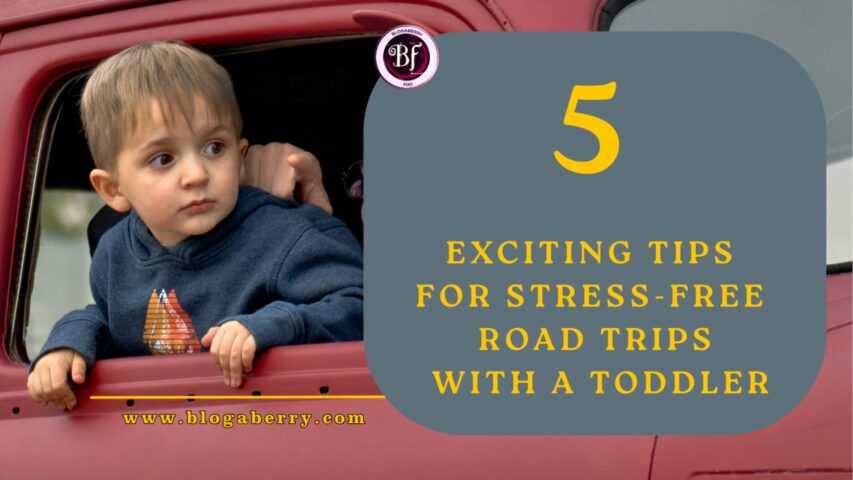
Nobody warns you that toddlers treat long drives like a formal grievance process. Parents still do it anyway, every weekend, armed with snacks, tablets, and a level of optimism that can only be described as brave.
Nearly 92% of parents are hitting the road with their kids this year. So you are not alone. You are just one of millions of adults trying to keep a small person calm for several hours in a moving vehicle.
Road tripping with a toddler ultimately comes down to three things. Namely, what you pack, when you leave, and most importantly, how realistic you are willing to be.
These exciting tips cover all of it honestly, so you can stop dreading the drive and actually look forward to it.
It’s really no secret that toddlers who miss naps make everyone miserable. Not just themselves. Everyone. So instead of fighting their schedule once you hit the road, just build the drive around it.
Sleep deprivation does a number on toddlers quickly. Lack of enough sleep impairs their ability to self-regulate emotions, which means, you guessed it right, more screaming. Try to stick close to their usual sleep routine as much as possible to keep things from unraveling out of control.
If your toddler naps from 1 to 3 pm, that’s your golden window right there. Get the car loaded and everyone buckled about 20 minutes before sleep usually kicks in. The motion of the car and the hum of the engine handle the rest. Most toddlers are out before you reach the highway.
Early morning departures could be another good option. When toddlers wake up early enough, they usually drift right back off without much protest. You can rack up quite a few miles before they are fully awake and ready to negotiate snacks.
Cover your longest stretches while they sleep. Save the shorter legs for when they are up and curious about everything outside the window.
A toddler in the backseat can make unexpected delays ten times worse. A closure with no detour, a weather stretch with nowhere to pull off, a standstill coming out of nowhere. These things happen more often than most people factor in when mapping out a road trip.
Crashes, weather closures, and sudden detours are common on long drives. Last year, a deadly crash on Cleveland Road shut down both lanes in St. Joseph County without much warning. What should have been a smooth stretch turned into a full stop with no timeline and no easy way around it. With a restless toddler in the car, a wait like this hits differently.
A quick check of live traffic updates before you leave costs five minutes. It can save you hours. Look up local alerts for every major stretch you plan to cover, not just your starting point or final destination.
Even when you plan carefully, these things sometimes come unannounced.
If you do find yourself caught up in a serious road incident, sorting out the legal side of things on your own can get challenging. Reaching out to an auto accident attorney in Cleveland is one of the best calls you can make in that situation.
They will handle the back-and-forth with insurance companies and stand in your corner if things ever make it to court, notes Piscitelli Law Firm.
This is not the trip where you introduce quinoa crackers and hope for the best. Bring what your toddler already eats without negotiation, because a moving car is the worst place to start a food argument.
Toddlers are picky by nature. Research backs this up. Selective eating is completely normal at this age, and not something a road trip will fix. Work with them instead of against them.
Stick to familiar finger foods in small portions with packaging they can easily handle. Keep it dry and contained. Anything crumbly will end up everywhere except their mouth, and you may also find it in the seat cushions three weeks later.
Pack at least twice what you think you need. Toddlers burn through energy fast during growth stages, which means hunger hits quickly and without much warning. A snack bag that runs out in two hours is a problem nobody wants in a moving vehicle.
Some toddlers hop in the car and roll with whatever comes. Others need a little more help feeling okay when everything around them is new, loud, and unpredictable. Neither is unusual. It just means one of them needs a sensory kit, and one of them probably still wants one.
Unfamiliar sounds paired with strange environments and the general chaos of being on the road can easily trigger a sense of overwhelmingness in a toddler. A small bag of familiar things can help ease the discomfort of sensory overload before it starts.
Consider packing soft textures they like to touch. It could be their favorite stuffed animal. Also, don’t forget noise-dampening headphones for louder stretches, and a couple of items from home that smell familiar. You don’t need anything fancy. Just a worn blanket or a toy they reach out for at home should do the trick.
The first trip will not be perfect. Someone will cry, you will probably miss a turn, or a juice box will leak on something important. Despite all these, you will still make it there, find somewhere decent to eat, and watch your toddler lose their mind over a hotel pool. That is the thing about road tripping with little ones.
Yes, it’s going to be messy, but completely worth it. Moreover, with every trip you successfully execute, the next one is going to get much smoother. On your first trip, closely observe what your kids need, what can be skipped, and what you can silence.
By the time you pull back into your driveway, your toddler will be asleep again, and you will already be googling where to go next.

READ MORE: 10 THINGS A MOM NEEDS TO PACK FOR A LONG VACATION | BLOGABERRY FOO
10 FUN THINGS (TRIED AND TESTED) TO DO WITH KIDS IN SINGAPORE | BLOGABERRY FOO
Photo by Tim Mossholder on Unsplash